GEO tools in 2026: the generative engine optimization stack
Generative engine optimization is what SEO becomes when the result is a spoken-style answer instead of a list of links. The tooling has settled into three layers — measure, monitor, optimize — and knowing which layer you are buying saves both money and confusion.
What counts as a GEO tool
Anything that helps you win the sentence: the moment ChatGPT, Claude or Grok answers a buyer's “what should I use for…” question. That covers more ground than classic SEO software, because the levers are different — models reward citable third-party sources, consistent entity naming and genuine authority far more than they reward on-page keyword placement. Wikipedia's overview of generative engine optimization traces the discipline's short history; the tool market around it is barely two years old and already crowded.
The three layers of the GEO stack
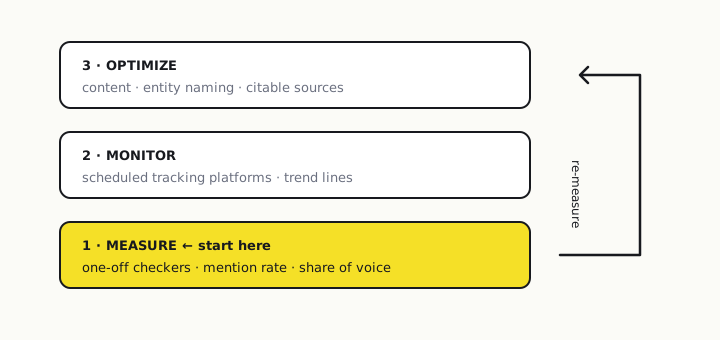
1 · Measurement. One-off checkers that query the engines live and report whether you are named, where you rank, and your share of voice against the brands that beat you. This is the layer we build: a free AI visibility check that runs your buyer questions across GPT-5.6, Grok and Claude and keeps every raw answer as evidence.
2 · Monitoring. Subscription platforms that re-ask the questions on a schedule and chart mentions over time — the Profound, Otterly and Peec tier, plus the AI-tracking modules inside Ahrefs and Semrush. Worth paying for once you know a gap exists and need to watch it close; our ten-tool comparison walks through the trade-offs by budget.
3 · Optimization. The unglamorous layer where the numbers actually move: content that answers buyer questions directly, entity-consistent naming across your site and profiles, and coverage in the sources models cite — reviews, comparisons, community threads. No dashboard does this for you; the first two layers exist to prove this one is working.
Choosing GEO tools by stage
Pre-baseline, spend nothing: one free measurement check tells you whether the models already recommend you, and a paid one-time report adds two more engines and the competitive leaderboard. Post-baseline with a real gap, budget for the work itself first — content and citable coverage — and re-measure quarterly; a subscription monitor earns its keep only when the trend line drives decisions. At agency scale, monitoring platforms plus the AI modules of your existing SEO suite become the reporting backbone, with one-off checks as the cheap second opinion.
Do GEO tools replace SEO tools?
No — they answer a question your SEO stack cannot see. Rank trackers watch the list of links; GEO measurement watches what the models say. Sites with strong classic SEO often discover they are absent from AI answers entirely, because the models lean on third-party sources the rank tracker never indexed. Run both surfaces and treat the deltas as the to-do list.
Start at layer one — measure
One free check: mention rate, rank and share of voice, with every raw answer attached. Free during launch, no sign-up.
GEO tools FAQ
What is a GEO tool?
Any tool that helps a brand get named in generative engine answers — ChatGPT, Claude, Grok and the AI layers of search. In practice the category splits into three layers: measurement checkers that establish whether models mention you, monitoring platforms that track it over time, and the content and authority tooling you use to change the answer.
Do I need GEO tools if I already rank well in Google?
Ranking and being recommended are different surfaces. Models weigh citable sources, entity clarity and third-party coverage — not your position on a results page — so a site can sit at #1 in classic search and still be invisible in AI answers. One measurement check settles whether that gap exists for you.
How do free GEO checkers differ from monitoring platforms?
A checker answers today's question — do the models name you, where, and against whom — for the price of one report. Monitoring platforms re-ask on a schedule and chart the trend, at subscription prices. The sequence that wastes the least money: baseline with a checker, do the optimization work, re-check, and only then decide whether a weekly trend line is worth paying for.
Which GEO tools should a small team start with?
Start at the measurement layer: run a free check, read which prompts you lose and who wins them, and fix the obvious gaps it exposes. Add a monitoring platform when the trend matters commercially, and lean on your existing SEO suite where it has added AI tracking. Tool names and trade-offs are in our ten-tool comparison.
Related: the LLM SEO tool · the 10 best AI visibility tools · pricing.