The LLM SEO tool that measures before it optimizes
When a buyer asks ChatGPT what to use, the answer is a sentence, not a results page. This free LLM SEO tool asks GPT-5.6, Grok and Claude the questions your buyers ask, then reports whether — and where — the models name you.
What an LLM SEO tool actually measures
Three numbers, all taken from real model answers rather than estimates. Mention rate: across the buyer questions tested, how often you are named at all. Average rank: when you are named, whether you are the first recommendation or a closing aside. Share of voice: your mentions as a percentage of every brand the models brought up — your slice of the conversation. The report keeps the receipts too: every raw answer, with your brand highlighted where it appears, and the exact prompts where competitors show up and you do not.
LLM SEO vs classic SEO
Classic SEO optimises a ranked list of links; LLM SEO optimises the sentence an assistant says out loud. That changes what you measure and how.
| Classic SEO | LLM SEO | |
|---|---|---|
| Surface | Ten blue links | One spoken-style answer |
| Unit of success | Position on the page | Being named, and named early |
| Measurement | Rank trackers | Querying the models directly |
| Levers | Links, on-page, technical | Entity clarity, citable sources, authority |
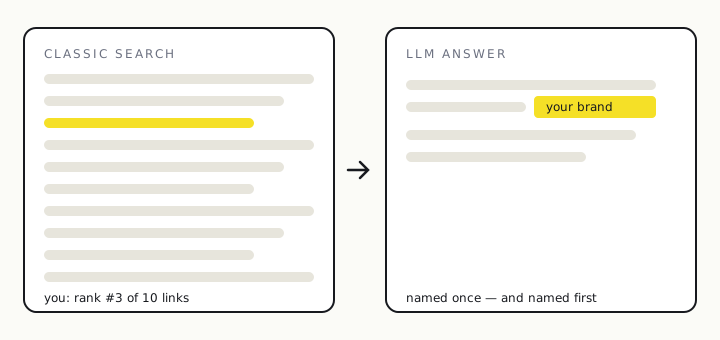
Google itself now documents how AI features surface web content — the direction of travel is not in dispute. What most teams lack is the baseline: does any model mention you today?
How this LLM SEO check works
Paste a brand. The tool infers your category, writes the questions a buyer in that category actually asks, and puts them to the engines live — no cached corpus, no guesswork. It then parses each answer for every brand named, scores mention rate, rank and share of voice, and attaches an authority rating to each competitor on the leaderboard so you can see whose shadow you are standing in. One check is the baseline; a re-run after your next content push tells you whether the needle moved.
Paid tiers deepen the same audit rather than re-rolling the dice: the brand's question set is shared across tiers and answers are cached briefly, so the standard and pro reports contain the launch check as a strict subset. Numbers stay comparable between runs — which is the whole point of a baseline.
Where a checker fits in the LLM SEO stack
Measurement comes first, and one-off checks are the cheapest honest measurement there is. Weekly monitoring platforms make sense once you have proven there is a gap worth tracking — our comparison of ten AI visibility tools covers that tier — and the optimization itself happens in your content, your entity consistency, and the third-party sources models cite. If you follow the broader stack, the GEO tools landscape page maps all three layers of the discipline.
Get your LLM SEO baseline — free during launch
Mention rate, average rank and share of voice across GPT-5.6, Grok and Claude, with every raw answer attached.
Questions teams ask before the first check
Is LLM SEO the same as GEO?
Same practice, two names. GEO (generative engine optimization) is the industry term; LLM SEO says the same thing from the practitioner's side — getting your brand into the answers that large language models give buyers. Whatever you call it, the work starts with measurement: you cannot improve a mention rate you have never seen.
Which LLMs does this tool query?
GPT-5.6 from OpenAI, Grok from xAI, and Claude from Anthropic. The launch check runs a single engine; the standard and pro reports put your buyer questions to all three. It does not query Gemini, Perplexity or Google's AI Overviews — the report only claims what it actually tested.
Can an LLM SEO tool improve my visibility directly?
No, and be wary of any tool that says otherwise. A measurement tool tells you where you stand — mention rate, rank, share of voice, and which prompts you lose. Moving those numbers is content and authority work on your site and in the sources the models read. The tool's job is to prove whether that work is paying off.
What does a check cost?
$0.99 per check, free during the launch, with no sign-up for the first run. The standard report is $9.90 for three engines and eight questions; pro is $29.90 and adds market intelligence built on Ahrefs data. Every tier is a one-time purchase, not a subscription.
Related: GEO tools in 2026 · the 10 best AI visibility tools · pricing.