Perplexity SEO: how to get cited on Perplexity
Perplexity answers by synthesising sources and listing them with numbered citations. Winning is not a ranking — it is being one of the sources the answer cites for the questions your buyers ask.
How Perplexity decides who to cite
Perplexity runs a search, reads the results, writes an answer, and attaches the sources it leaned on. So the question is not “where do I rank” but “why would it pick me over the pages it cites now.” Because those citations are visible, Perplexity is unusually legible: for any question you care about, you can read exactly which sources it currently trusts and diagnose the gap. That transparency is the SEO opportunity.
The Perplexity SEO levers
Findability — the crawler has to reach and read your content. Direct question-fit — a page that answers the exact query beats a broad one that mentions it. Entity clarity — an unambiguous account of what you are, so the model places you correctly. Corroboration — being referenced by other sources it trusts, since the answer is stitched from the wider web. None of these is a paid placement; they are the same authority-and-clarity signals that generative engine optimization is built on.
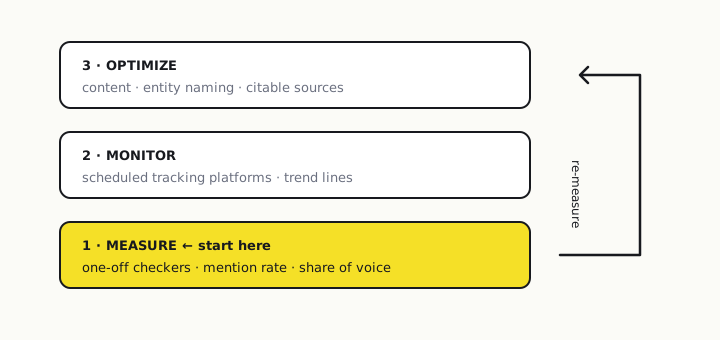
The underlying discipline is generative engine optimization, and its levers carry across answer engines — which is why the same work pays off on more than one surface.
Where measurement fits
The honest caveat: this site’s checker does not query Perplexity. It queries GPT, Grok and Claude. But the sources and clarity that get you cited by those assistants overlap heavily with what Perplexity rewards, so an assistant-surface baseline is a cheap proxy for whether your GEO foundations hold up. Take the baseline, fix the gaps it exposes, and read Perplexity’s own visible citations to confirm the same work is landing there.
What to fix first
Start where the leverage is highest. Confirm the crawler can actually reach the pages that answer your key buyer questions — a page that is not readable cannot be cited. Then tighten the description of what you are so a model never has to guess your category. Next, make each target page answer one question directly instead of burying it inside a broad explainer. Finally, earn a mention or two on the authoritative sources in your space; a single credible third-party reference often does more than a page of your own claims. Work that list top to bottom and re-check, rather than chasing every engine at once.
Baseline your GEO foundations — free during launch
See whether GPT, Grok and Claude name you today. The clarity and sources that move them move Perplexity too — no sign-up.
Perplexity SEO FAQ
What is Perplexity SEO?
Perplexity SEO is the practice of getting your site cited and recommended in Perplexity’s answers. Perplexity is an answer engine: it searches, synthesises a response, and lists the sources it used with numbered citations. Ranking means becoming one of those cited sources for the questions your buyers ask — which depends on being findable, clearly relevant, and trustworthy to the model, not on a keyword position.
How do I rank on Perplexity?
Make yourself the easy, credible source for a specific question. That means clear entity positioning, content that answers the query directly and factually, a site Perplexity’s crawler can read, and corroboration from other sources it trusts. Because Perplexity shows its citations, you can reverse-engineer wins: see which sources it currently cites for your target questions and work out why they were chosen over you.
Does VisibilityChecker check Perplexity?
No — and it will not pretend to. This checker queries GPT, Grok and Claude, not Perplexity. It is an honest adjacent signal: the sources and clarity that get you cited by those assistants heavily overlap with what Perplexity rewards, so an assistant-surface baseline is a cheap proxy while you do the shared optimization work. The report only claims the engines it actually tested.
Is Perplexity SEO different from Google SEO?
Related but distinct. Google SEO optimises for a ranked list; Perplexity SEO optimises for being one of the cited sources in a synthesised answer. The foundations overlap — crawlable, authoritative, clearly-relevant content — but the unit of success is a citation in the answer, not a position on a page, so you measure and tune it differently.
Related: ranking in AI Overviews · GEO tools in 2026 · the LLM SEO tool.